> For the complete documentation index, see [llms.txt](https://documentation.2pintsoftware.com/llms.txt). Markdown versions of documentation pages are available by appending `.md` to page URLs; this page is available as [Markdown](https://documentation.2pintsoftware.com/deployr/task-sequences/adding-and-removing-steps.md).
# Adding and removing steps
{% hint style="info" %}
Click **Save all changes** regularly. If you navigate away from the page accidentally, you may lose your changes. Saving frequently also allows you to use **Cancel** to undo accidental actions, such as deleting a step unintentionally.
{% endhint %}
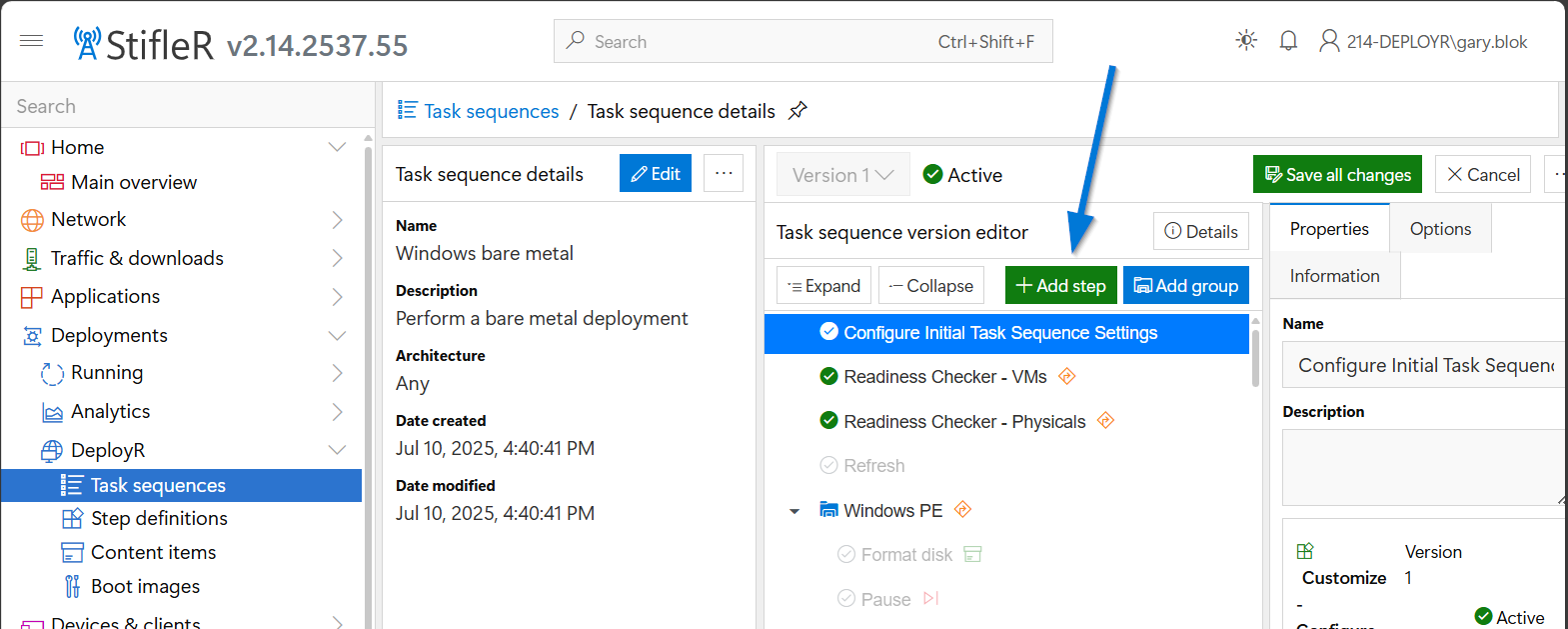
To add a step to a task sequence, open the task sequence and click the blue **Edit mode** button in the upper-left corner. Once in edit mode, the button will be replaced with a "Save all changes" button and a "Cancel" button.
## Adding a Step
There are several ways to add steps. The **Add Step** button in the **Task sequence version editor** frame lets you select a step and add it to the task sequence. By default, the step is added at the end, but you can move it to the desired location.
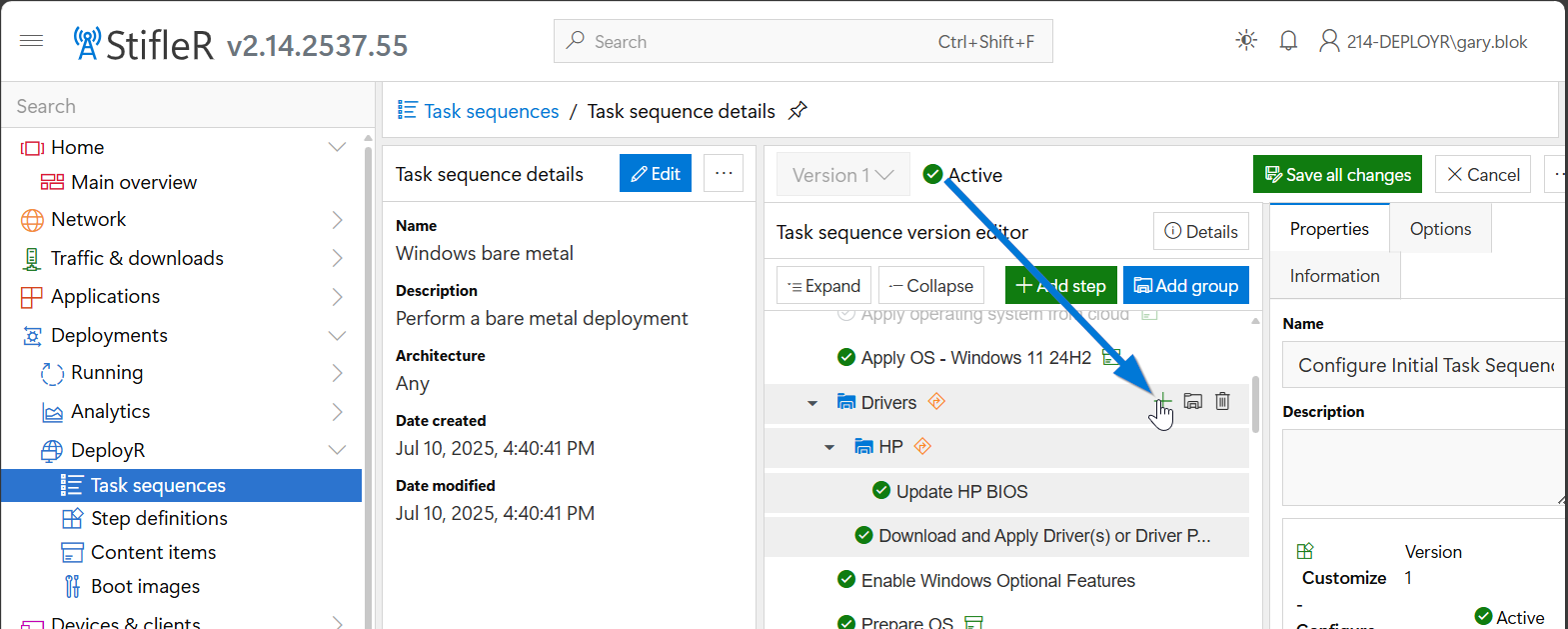
Alternatively, navigate to the group where you want to add the step and click the plus button to the right of the folder icon.
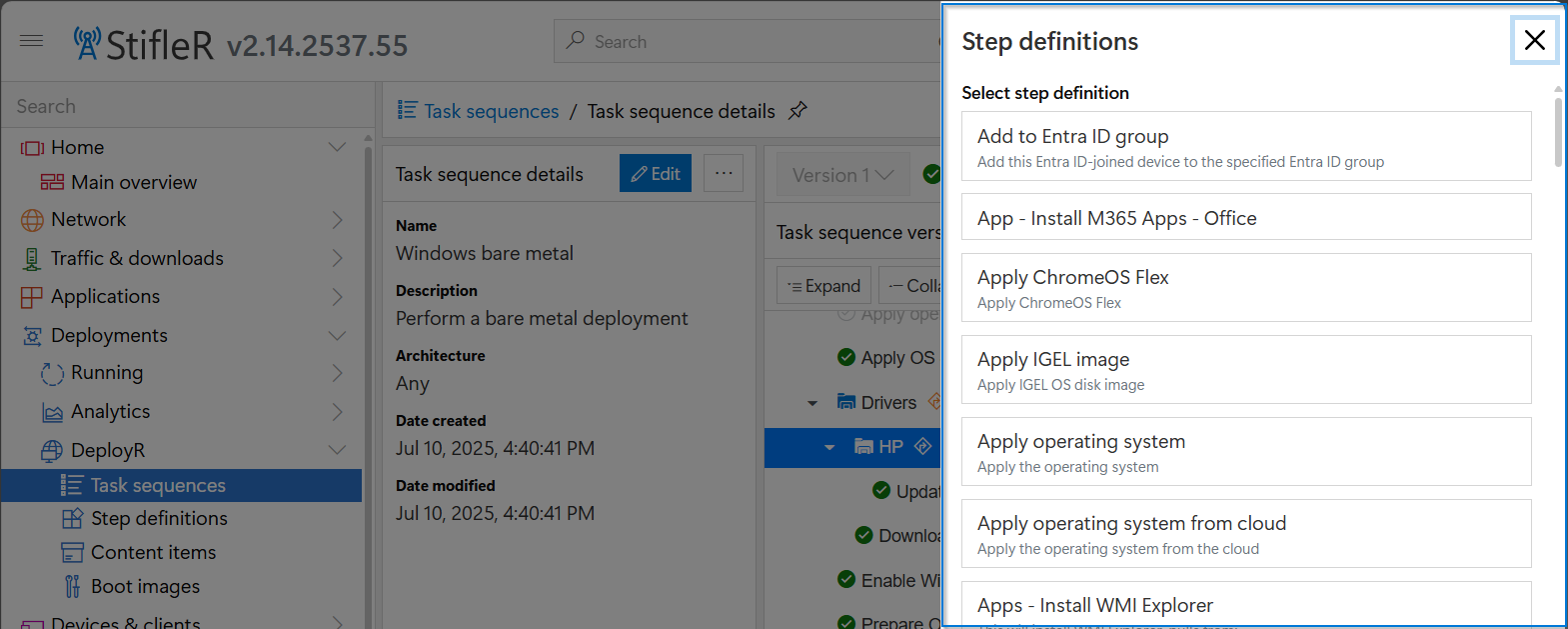
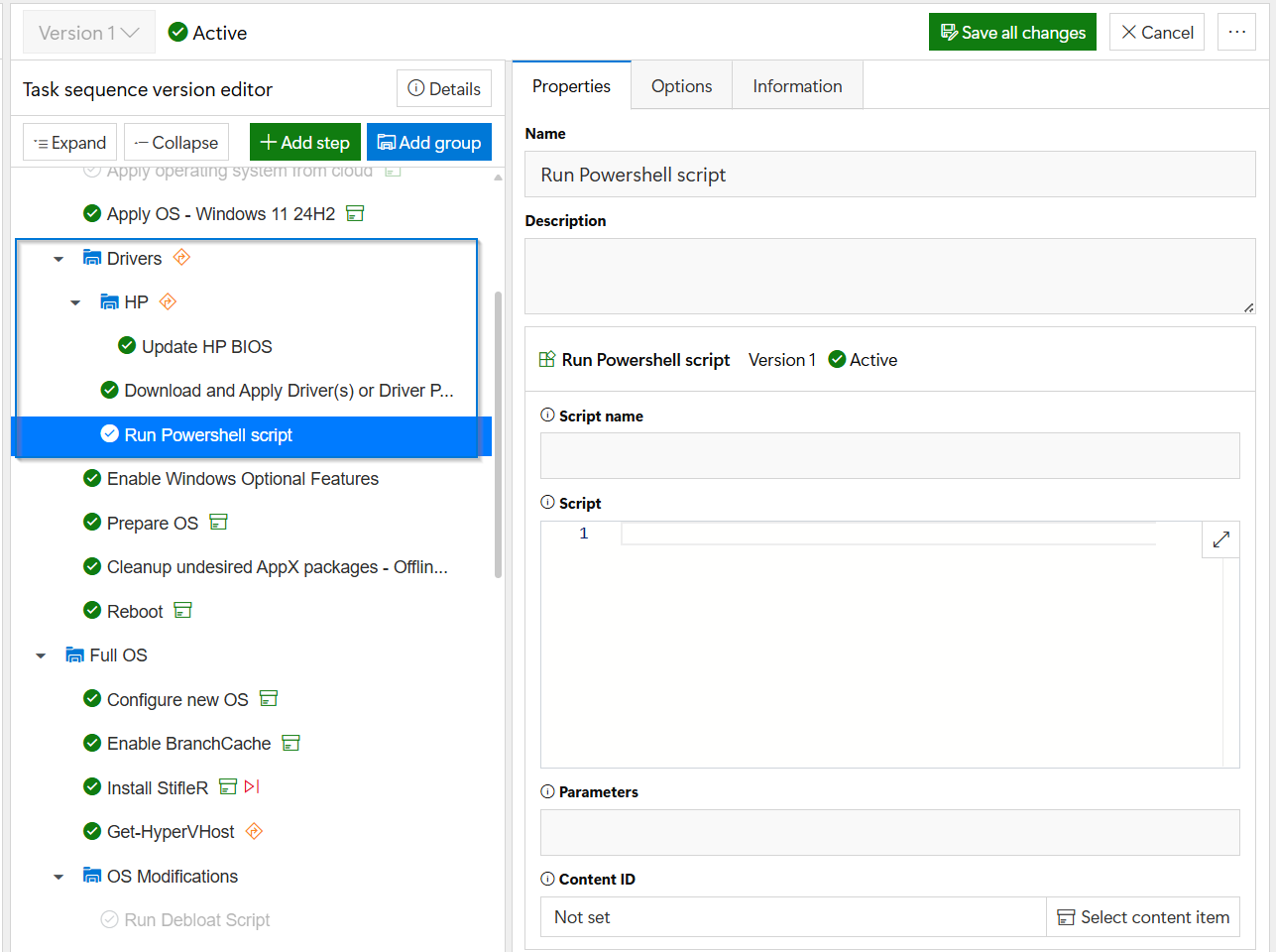
A panel appears on the right with the available step definitions:
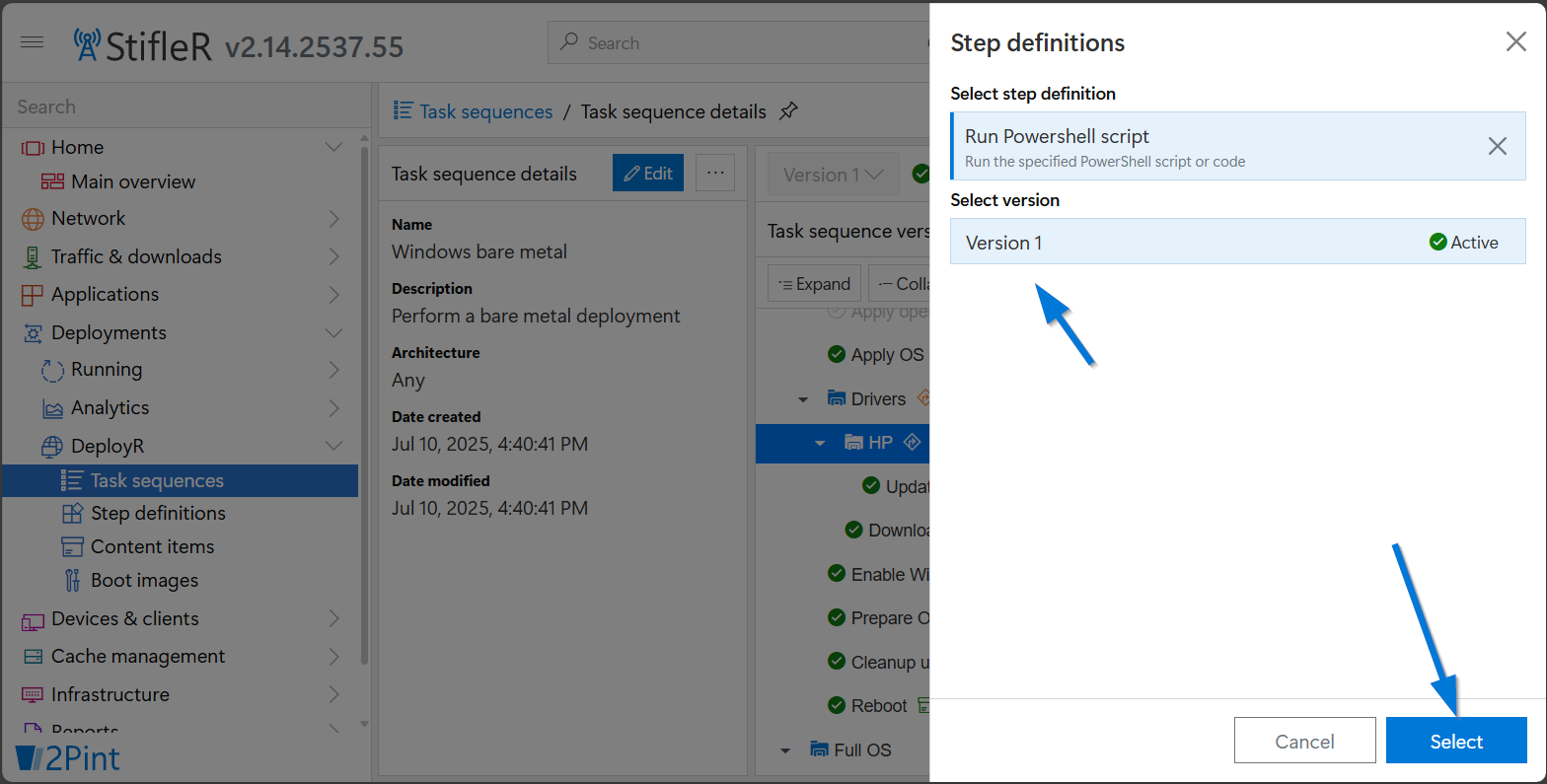
Choose the version (often there is only one), then click "Select".
The step is added as the last step in the group that was selected when you clicked the "+" icon.
At this point, edit the step to add the name and script information, and click Save. If you move away from the page without saving, all changes completed will be lost, resulting in the same behavior as pressing the "cancel" button.
## Removing a Step
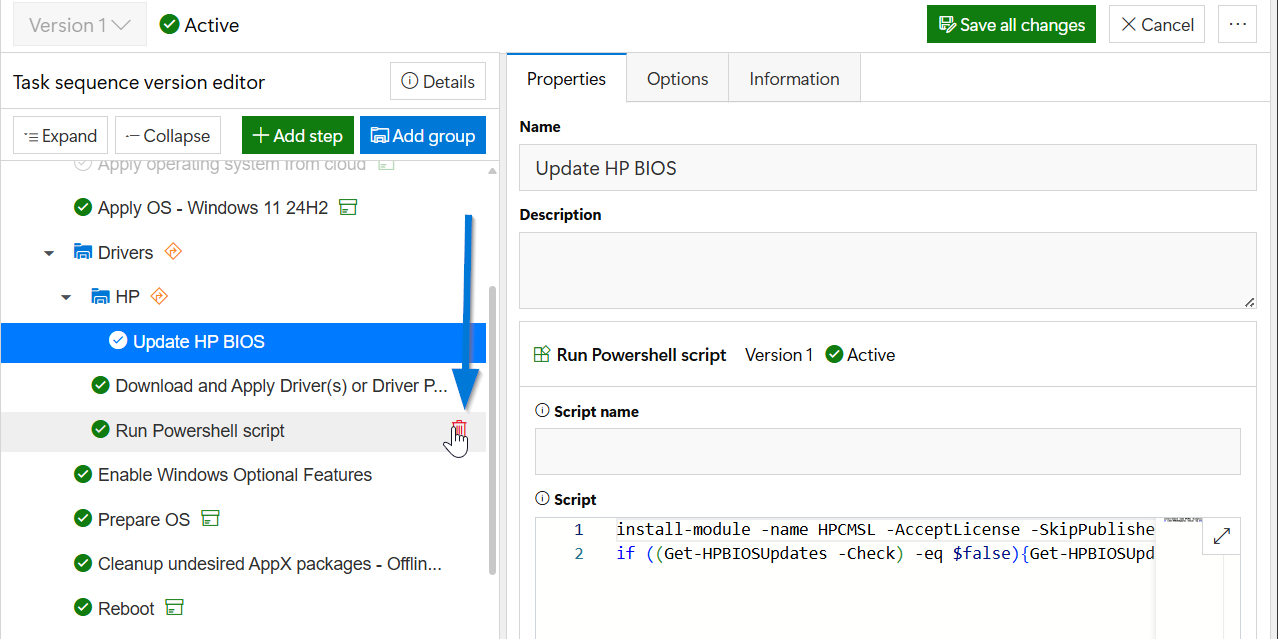
To remove a step, put the task sequence in edit mode, find the step, and hover over it to display the available option icons. Then click the trash can icon.
In this example, I have the "Update HP BIOS" step highlighted, but I then hover over the new blank "Run PowerShell script" step to show the trash can icon, which I will then click to remove it.
The removal is immediate; there is no "are you sure about that?" dialog box. If you accidentally delete something and have instant regret, press the cancel button! When editing is complete, press the "Save all changes" button.
---
# Agent Instructions
This documentation is published with GitBook. GitBook is the documentation platform designed so that both humans and AI agents can read, navigate, and reason over technical content effectively. Learn more at gitbook.com.
## Querying This Documentation
If you need additional information that is not directly available in this page, you can query the documentation by asking a question.
Perform an HTTP GET request on the following URL with the `ask` and `goal` query parameters:
```
GET https://documentation.2pintsoftware.com/deployr/task-sequences/adding-and-removing-steps.md?ask=&goal=
```
`ask` is the immediate question: it should be specific, self-contained, and written in natural language.
`goal` is what the user is ultimately trying to achieve, the reason they need the answer. Sharing it helps GitBook give you a better, more relevant answer. A goal is most helpful when it describes the outcome the user wants rather than restating the question. For example, with `ask=how do I create an API token`, a goal like `automate deployments from our CI pipeline` lets GitBook tailor the answer to that use case.
The response will contain a direct answer to the question and relevant excerpts and sources from the documentation.
Use this mechanism when the answer is not explicitly present in the current page, you need clarification or additional context, or you want to retrieve related documentation sections.